
Building Knowledge in the Doomscroll Age: Reflections from a Recent Graduate

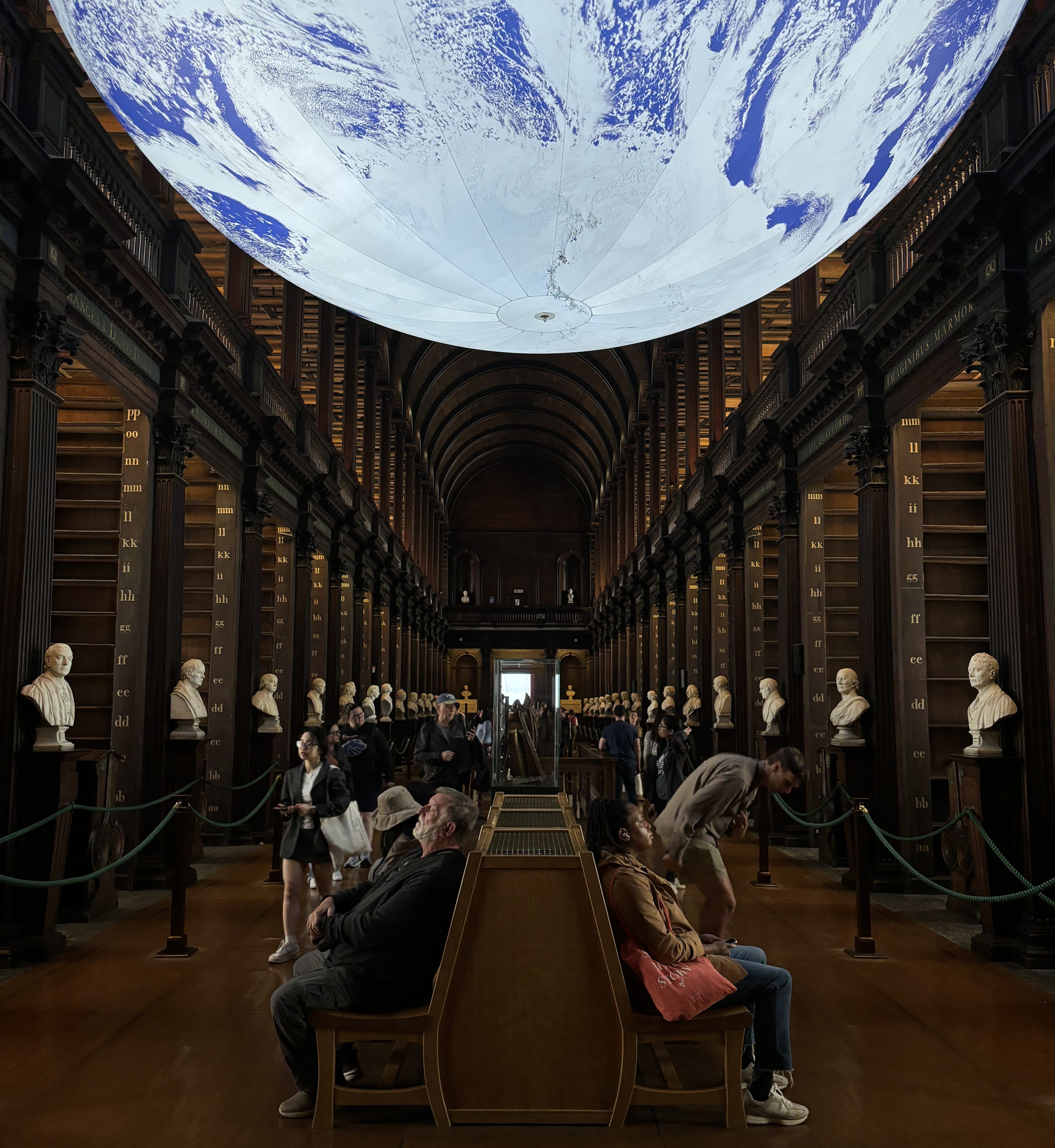
If reflection was a physical space, it would be the place where I learn the most. And perhaps it would look something like the Old Library at Trinity. You could even argue that true learning only happens interiorly, in this space rather than the classroom, because it is only what we process and hold on to that stays with us longterm. As I’ve gotten older the fickleness of memory has troubled me, but I am trying to change my habits so that the knowledge I care about sticks. Enacting this involves reading and rereading, journalling and taking notes on life1, reviewing coursework, and perhaps most importantly, tuning out the background noise. Unfortunately, we are so enveloped in the noise, this constant flood of information, that processing it all into knowledge is impossible. Rather than a closet of mirrors, reflection is a window into all the images and information we have collected and found valuable, like birds collecting scraps for a nest. Finishing grad school, I have collected excessively and the epistemological nest is a mess. Now what do I do with all of this?
It is time to take stock and reflect on being a so-called master in anthropology. Completing the assignments and achieving the grades is not enough for me personally to feel like I have fully chewed and processed the knowledge. As a student of our modern era, I am an expert at rote memorization which has gotten me through many undergraduate courses. However, rote memorization turns your brain into a trash can: throw in the knowledge like garbage and when it’s full, take it out for the trucks. For my graduate seminar in archaeological theory we read a chapter or two a week of Bruce Trigger’s INFAMOUS tome, A History of Archaeological Thought, and turned in a two page single-spaced summary of each chapter. Then one person was selected to read their summaries in class and we “discussed,” often finishing up well before our scheduled end-time. I was not thrilled with the teaching style in this course, the busy-work feel of the assignments, and the tangible rush everyone was in to get out of class. So much information was going in and out of my head I was left with a very broad impression of the history of my field. An unsatisfactory impression, obviously, but one I can fix.
If my thesis has taught me anything, it is that I don’t really know something until I’ve read it over and over and put it into my own words. I developed this habit in high school but it does not feel as instinctual anymore. I often have to stop myself from skimming everything and turning reading into a “scrolling” experience. When I was younger, I would read my favorite books multiple times and scour over poems until I had them memorized. I feel like the only way to know a poem is to be able to carry it around with you. The Love Song of J. Alfred Prufrock and Lady Lazarus are a part of me now and can be consulted like prayers. The researching and writing process for my thesis forced me into this habit again. Whenever I am writing a research paper or article, I need to have my sources open so that I can consult them as I go. Every article or book chapter I cited in my thesis was read a dozen times over, which is why all of my thesis information has become a part of me, like an extra limb. Perhaps this form of memorization is more effective because it is not just regurgitating facts; I am processing the information myself and holding it up against everything else I know— factual, experiential, and emotional. I feel like I know something when I can talk about it easily in conversation and explain it to someone who may not be familiar with the subject. All of this knowledge building, the foundations and adornment of the nest, comes with patience, passion, and reflection.
The real problem of humanity is the following: We have Paleolithic emotions, medieval institutions and godlike technology. And it is terrifically dangerous, and it is now approaching a point of crisis overall— E.O. Wilson
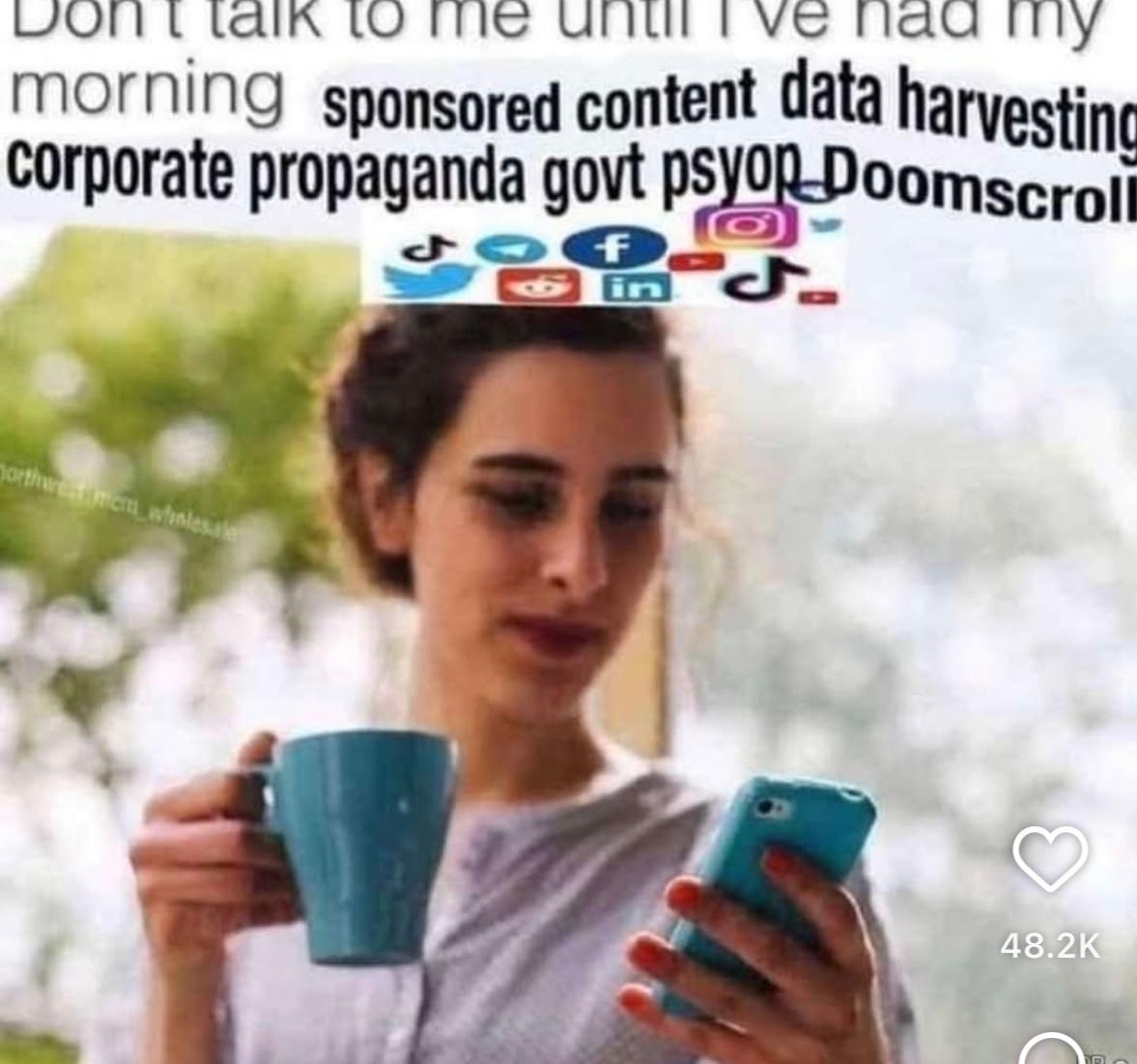
The reason I am sharing this with you all is that I believe we are in a crisis of reflection. Time is essential for knowledge acquisition and we increasingly spend more time consuming than processing. The average American spends multiple hours on social media a day and its far worse for children and teens.2 The manufactured desire for entertainment has insidious consequences: the more time you spend consuming the less time you spend thinking. The less time you spend thinking, the less information you process about your life and the world around you. We are so overwhelmed with information that our primate brains cannot handle it, and the memory loss I have experienced as consequence has scared me. Remembering the context and the quotes has gotten harder. Sometimes I begin a thorough explanation of a topic, only to realize that I’ve lost all the details. The information has alluded me and the knowledge is lost.
Not only do our primate minds do well with reflection, I think we thrive on it. In the peace of monotonous work epic poems were composed and recited. In the quiet of the morning, waiting for my coffee to brew, I gather all I need to know about my day from birdsongs and the view outside my window. I always have a better, more productive day when I stave off the urge to look at my phone. Our cultural shift towards consuming and away from thinking has cascading effects on our psychological, spiritual, and creative well-beings. And this isn’t speculation: cognitive disorders in young people are on the rise.3 I am not speaking on this from a place of judgement, but as someone who is equally suffering from the consequences of our pleasure-seeking world.
If you have ever embarked on The Artist’s Way by Julia Cameron, a guidebook on unlocking creativity, “Week 4: Recovering A Sense of Integrity” may have troubled you. I have never been able to get past it. Every week, Cameron assigns exercises for the reader to follow and on Week 4 you are supposed to commit to reading deprivation, but it is more than that. It is full on media deprivation. In 1992, the concept of reading deprivation alone may have been troubling, coupled with abstaining from network TV. In 2026, a media free week seems unfathomable. Not only are we not reading (many Americans don’t read anyway4), we are coming home to streaming services, social media scrolls, and video games. Or we are too busy working and taking care of the home to relax.
It is a paradox that by emptying our lives of distractions we are actually filling the well. Without distractions, we are once again thrust into our sensory world. With no newspaper to shield us, a train becomes a viewing gallery. With no novel to sink into (and no television to numb us out) an evening becomes a vast savannah…
We gobble the words of others rather than digest our own thoughts and feelings, rather than cook up something of our own.
Cameron 1992: 87
Confronting Week 4 forces us out of dopamine cycles and desensitization, and it is terrifying. The savannah of a screenless evening sounds like getting dropped into the wilderness without equipment, Man vs. Wild style. But I think the path to cultivating knowledge is the uncomfortable path. And it is a path we are capable of walking down if we turn away from pleasurable distractions and towards what really fascinates us. Algorithmic newsfeeds are also antithetical to knowledge building. Rather than seeking the information you want, we are feed whatever the platform believes will keep our attention. Exploring and collecting becomes more like playing slots than pursuing knowledge. Unfortunately, nearly every platform (including Substack) follows the algorithm model and rather than guiding ourselves down a path of knowledge acquisition, we try to divine what is important from an oracle that does not have out best interests in mind. Were sifting through the garbage for something that shines and wasting our time while doing so. In the words of William Somerset (Morgan Freeman) from Seven, which I paraphrased in my post on AI:
You have a world of knowledge at your fingertips and what do you do? Play poker all night.
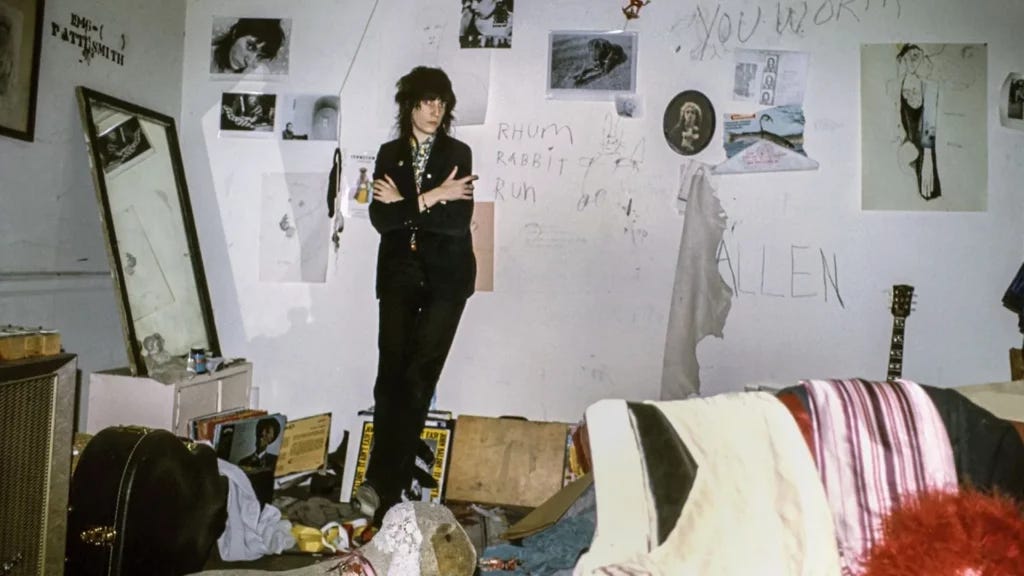
So my greatest takeaway from graduate school is this: we have to take control of our time and both the quality and quantity of information we consume. A majority of us have fallen into screen and social media addiction which will hinder knowledge building and creativity, but luckily we all have control over our time and what we do with it. You do not need to go to graduate school to continue your education or to cultivate your interests and skills. We can all develop our own curricula to build the nests we want to live in, and it begins with actively seeking out the knowledge we find interesting, processing it thoroughly, and incorporating it into our lives. Maybe we can all try Week 4 and see what happens, but my partner and I are starting with one media-free night a week, channeling Patti Smith and Robert Maplethorpe in their Chelsea apartment.
Thanks for reading, and we’ll be back to our regularly scheduled programming— archaeological deep dives— next week! <3
If you want to support my work consider buying me a coffee
The main thing I am trying to do know is write down important or funny things said by the people I love. I want to have a personal book of quotes one day from friends and family. I also have a fear of forgetting important moments with my loved ones because I take it for granted and fill my mind with reels and memes instead.
I want to be clear that cognitive decline is defined as “serious difficulty concentrating, remembering, or making decisions.”
Rising Cognitive Disability as a Public Health Concern Among US Adults
In 2022, only around half of adults surveyed read one book in the past year.
What a wonderful and mature write-up, Hannah! Your experience can benefit anyone caught up with mindless doomscrolling and needs a reset, thanks for that.
loved this piece!! recently have been really connecting with video essays by Nina Montagne on youtube, maybe you'd enjoy them too. she talks about the importance of reading, and what she calls "making time habitable". i love her videos, let me know if you watch :)